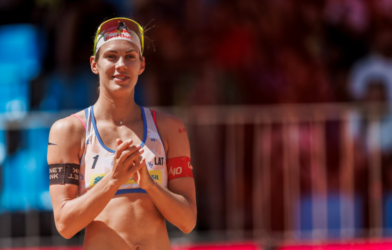
Throughout her career, Canadian beach volleyball player Brandie Wilkerson has learned from the people on the other side of the net and, perhaps even more, from the people standing beside her.
An Olympic silver medallist and one of the world’s top blockers, Wilkerson has spent years competing in a sport where two athletes share every challenge, every decision and every result. Along the way, she has come to appreciate the responsibility that comes with being part of a partnership.
To her, being a good teammate is not simply about working towards the same goal. It begins with a willingness to invest in someone else’s success as much as your own.
“I think being a great teammate truly means wanting the best for them,” Wilkerson said. “Wanting to see them succeed, wanting to be a part of that journey, wanting to help, wanting to serve, wanting to cheer them on. I think it’s respect and honesty and camaraderie, and just a real embracing of a journey that you are both committed to.”
Spending so much time with a teammate, whether in training, competition or travelling around the world, can create a unique relationship. Over the years, Wilkerson has found that some of her biggest lessons have come through those day-to-day interactions and the honest conversations that often accompany them.
She believes the best teammates can influence each other in ways that extend beyond the confines of the court.
“I think great teammates help each other grow in a life way,” she said. “Who are you as a person, in your character, in your heart, in your mind? Because the sport is so exposing of you in a physical, emotional and mental state that a partner and a teammate will mirror that back to you sometimes when you need it the most.
“There are not a lot of opportunities for people in your life to support you and challenge you at the same time. I think a great teammate does that for you.”
Every teammate has brought something different to Wilkerson’s career. In recent years, she says Melissa Humana-Paredes has reinforced the value of professionalism through the way she approaches the sport day after day.
“I think I am a very driven person, but my teammates throughout my career, and especially now, have shown me true professionalism,” Wilkerson said. “I’ve learned so much from their habits and their commitment.
“Even my partner Melissa, she has shown me such great work ethic outside of games. We think about partnerships just in game-time situations. I’ve learned a lot in practices, in the drives, in the travel days, in the logistics, all of the extra things that really set someone apart from being talented to being a professional athlete. My teammates have shown me that entirely.”
Not every partnership is tested during moments of success. Wilkerson believes the strongest ones reveal themselves when things are not going to plan.
Disappointment, frustration and setbacks are part of every athlete’s career, but she says those moments make it even more important to stay connected to the qualities that brought a team together in the first place.
“I think every strong volleyball team has to protect gratitude,” she said. “It’s a word that gets thrown around a lot, but in moments where you want to be angry, you want to blame, you want to maybe take all the credit, there are so many places sport can take you, and especially some negative places.
“There are hard times, and partnerships are easy when things are easy, but when things are hard, protecting gratitude means protecting honesty, respect, commitment and genuinely enjoying this person’s company and wanting to see them succeed.”
This World Volleyball Day on July 7, take a moment to recognise the teammates who have been part of your successes, your challenges and your growth. Share your story using #WorldVolleyballDay.