Published: 11 Aug 2026
Category: Sports & Development | Sports Medicine | Youth Sports
For young people living in refugee camps, underserved communities and urban slums, sport can provide much more than physical exercise. It can create opportunities for friendship, confidence, mental wellbeing and the development of important life skills.
However, injuries can quickly push young athletes away from the activities they enjoy. A twisted ankle, knee pain or another sports-related injury can mean weeks or months away from the field—particularly where access to affordable medical care is limited.
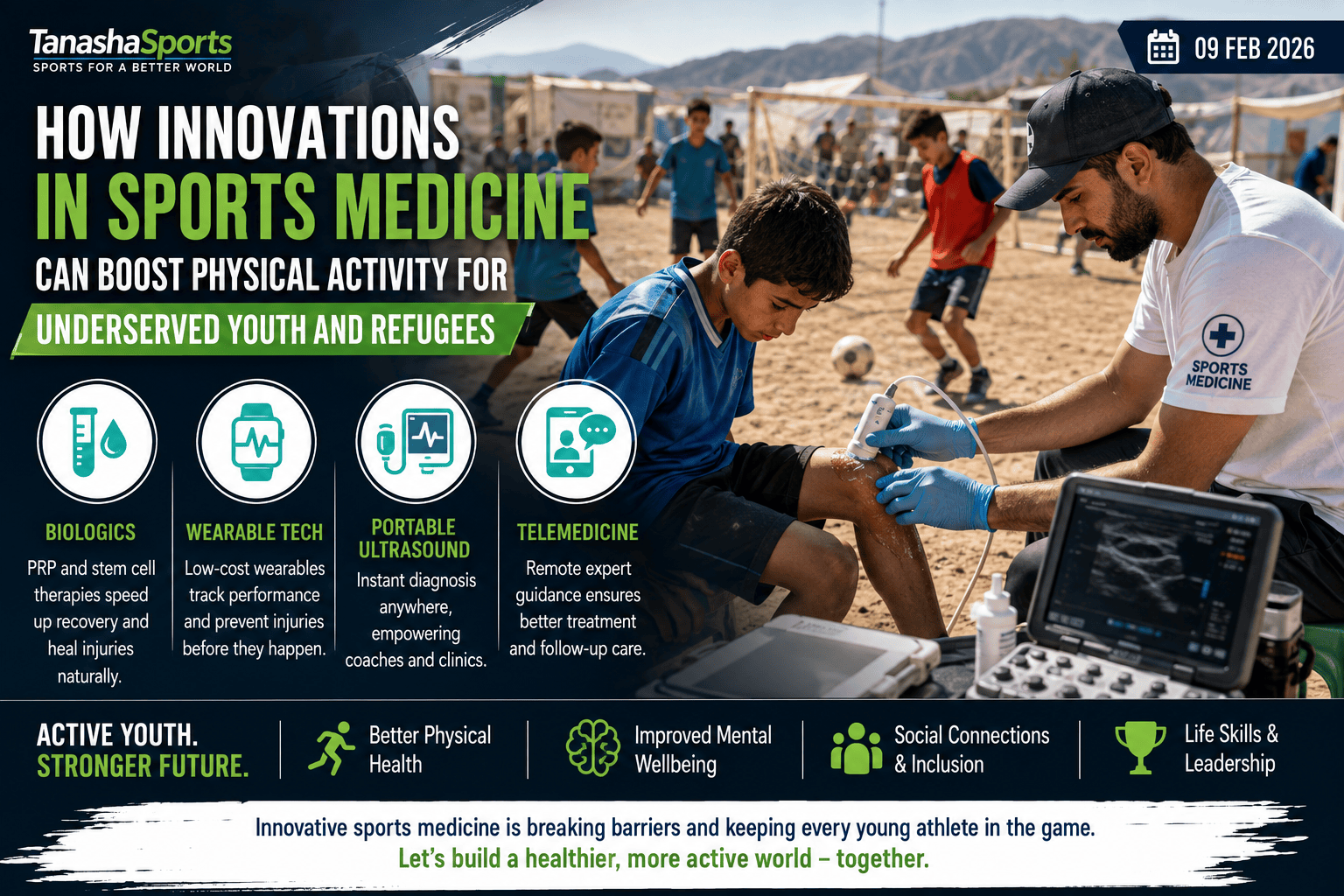
Emerging sports-medicine technologies, including biologics, wearable devices, portable ultrasound and telemedicine, could help improve injury management and make sports participation more accessible.
Important: Treatments such as PRP and stem-cell therapies require qualified medical professionals and are not appropriate for every injury or young athlete. The examples and claims in this article should not be interpreted as medical advice.
Why Sports Matter for Underserved Youth
Sports programs can give young people a safe environment to build physical fitness, social connections and confidence. For refugees and other marginalized communities, organized sports can also support integration and provide a sense of belonging.
But limited healthcare resources can create another barrier: sports injuries.
When an injury is untreated or rehabilitation is unavailable, young athletes may stop participating altogether. This can reduce the physical and social benefits they receive from sports programs.
Better access to injury prevention, diagnosis, rehabilitation and appropriate medical treatment could therefore play an important role in keeping young people active.
Biologics and Sports Injury Recovery
Biologics are treatments that use biological materials or substances to support the body’s natural repair processes. One example discussed in sports medicine is Platelet-Rich Plasma (PRP).
PRP is prepared from a patient’s own blood. Platelets and other components are concentrated and may be used in certain medical situations to support tissue healing.
For sports programs operating in communities with limited resources, the potential attraction of minimally invasive treatment is clear. However, PRP is not a universal solution, and decisions about its use should be made by appropriately qualified healthcare professionals after proper diagnosis.
Potential Role of PRP
Research into PRP has examined its use in a range of musculoskeletal injuries. The evidence varies depending on the injury, patient age and treatment protocol.
For youth sports programs, the priority should therefore remain:
- Early identification of injuries
- Professional medical assessment
- Appropriate rehabilitation
- Safe return-to-play decisions
- Long-term injury prevention
The goal should never simply be to get an injured player back onto the field as quickly as possible.
Wearable Technology Can Help Prevent Injuries
Technology is also changing the way athletes are monitored.
Affordable wearable devices can collect information such as:
- Heart rate
- Activity levels
- Movement patterns
- Training load
- Running distance
- Recovery indicators
For coaches working with large groups of young athletes, this information could potentially help identify unusual changes in workload or movement.
Low-cost technology is particularly interesting for community sports programs because it can provide useful information without requiring expensive laboratory equipment.
However, wearable data should support—not replace—professional coaching and medical judgment.
Portable Ultrasound for Community Sports
Portable ultrasound technology is another promising development.
Traditional medical imaging equipment can be expensive and difficult to access in remote locations. Handheld ultrasound devices can potentially make certain forms of assessment more accessible.
In community sports programs, appropriately trained healthcare professionals could use portable ultrasound as part of injury assessment and referral.
This could be particularly useful in environments where specialist medical facilities are located far away.
Telemedicine Can Connect Communities With Specialists
Telemedicine can help bridge the distance between underserved communities and sports-medicine professionals.
A coach or healthcare worker in a remote location could potentially connect with a specialist through video consultation. This may help with:
- Initial guidance
- Rehabilitation planning
- Follow-up consultations
- Injury monitoring
- Referral decisions
For refugee programs and rural communities, remote medical support could complement local healthcare services.
Telemedicine should nevertheless be integrated into established healthcare systems rather than treated as a replacement for in-person examination when one is required.
Combining Sports Medicine With Sports-for-Development Programs
The biggest opportunity may come from combining medical innovation with existing sports-for-development initiatives.
Organizations working with underserved youth could develop partnerships involving:
- NGOs
- Local healthcare providers
- Sports federations
- Universities
- Sports-medicine specialists
- Technology companies
- Government agencies
- International development organizations
A community sports hub could potentially combine injury-prevention education, basic screening, rehabilitation support and referral pathways.
This approach would allow medical innovation to become part of a broader system rather than relying on a single treatment.
A Practical Pilot Model
A small-scale pilot program could begin with a limited number of sports communities or refugee camps.
Step 1: Identify Common Injuries
Collect information about the injuries most frequently affecting participants, such as ankle, knee and muscle injuries.
Step 2: Train Coaches
Coaches can receive basic education on injury prevention and recognizing symptoms that require professional assessment.
Step 3: Establish Medical Referral Networks
Create clear referral pathways between sports programs and qualified healthcare providers.
Step 4: Introduce Appropriate Technology
Depending on available resources, programs could evaluate:
- Wearable fitness trackers
- Portable diagnostic equipment
- Digital rehabilitation platforms
- Telemedicine services
Step 5: Measure Results
Programs should monitor meaningful outcomes such as:
- Participation rates
- Injury rates
- Recovery time
- Return-to-sport rates
- Repeat injuries
- Athlete wellbeing
- Cost per participant
This data can help determine whether an intervention is genuinely improving access to sport.
The Sports Medicine Market Is Growing
The source material cites market research from Roots Analysis, which estimates that the global sports medicine market was valued at USD 6.30 billion in 2024 and could reach USD 12.33 billion by 2035, representing an estimated CAGR of 6.2%.
Roots Analysis – Sports Medicine Market
Growth in the sector could contribute to continued development of portable technologies, digital healthcare tools and new treatment approaches.
For underserved communities, however, innovation will only have an impact if these technologies become safe, affordable, accessible and appropriately regulated.
Challenges That Must Be Addressed
Innovation alone will not solve the healthcare challenges faced by underserved young athletes.
Several barriers remain.
Cost
Advanced medical equipment and specialist treatment can still be expensive. Programs need sustainable funding rather than short-term donations.
Training
Technology is only useful when people are properly trained to operate it and interpret the information.
Safety
Youth athletes require special consideration. Medical treatments must follow appropriate clinical guidelines, consent requirements and safeguarding procedures.
Access
A sophisticated device is of limited value if there is no qualified professional available to use it.
Cultural Considerations
Sports and healthcare programs should respect local cultures and community needs. Programs should be adapted to the sports popular in each community, whether football, cricket, hockey, kabaddi or other activities.
Building a More Inclusive Future Through Sport
Sports have the potential to transform lives, particularly for young people facing displacement, poverty or limited access to recreational opportunities.
Medical innovation can help remove one of the important barriers to participation: injury.
From wearable technology and portable diagnostics to telemedicine and appropriately selected medical treatments, new tools could help sports programs improve prevention, assessment and rehabilitation.
But the focus should remain on the athlete—not the technology.
The most successful programs will combine qualified medical care, trained coaches, injury prevention, rehabilitation, affordable technology and strong community partnerships.
When young people can safely return to the sports they love, the benefits extend beyond the playing field. They gain opportunities for better physical health, social connection, confidence, teamwork and leadership.
Conclusion
For underserved youth and refugees, access to sport can be an important part of building healthier and more connected communities.
Innovations in sports medicine could help reduce barriers created by injuries, but they must be introduced responsibly, with qualified healthcare professionals and appropriate safeguards.
The future of inclusive sport is not simply about getting more young people onto the field—it is about helping them stay there safely.